
Your Guide to Installing Gabion Rock Wall with the Right Partner
Table of Contents
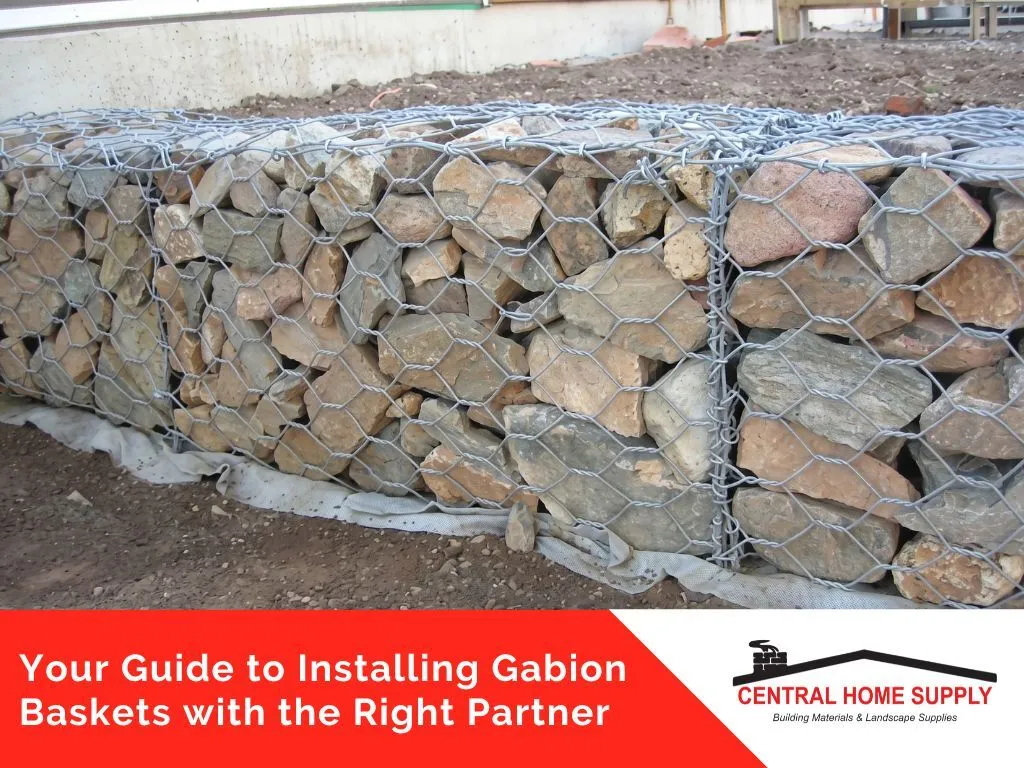
Why Does a Gabion Rock Wall Work When So Many Retaining Walls Crack, Lean, or Trap Water Behind Them?
If your slope is washing out, your yard stays wet after every storm, or an old wall is starting to fail, you need a solution that can hold soil in place, let water move through, and still look natural in the landscape.
Central Home Supply helps homeowners and contractors turn that concern into a clear plan. With decades of experience sourcing stone, wall materials, and hardscape supplies throughout the Santa Cruz area, our team can help you choose the right rock, understand the right basket setup, and get the materials you need for a gabion rock wall built with purpose from the start.
- What it is: Wire mesh cages filled with stone that work as gravity retaining walls
- How it works: The sheer weight of the rock-filled baskets resists lateral soil pressure
- Key advantage: About 30% porosity means water drains freely, with no hydrostatic pressure buildup
- Typical lifespan: 50 to 100 years depending on wire type and environment
- DIY-friendly? Yes, for walls under 3 feet; taller walls need an engineer
- Best for: Slopes, hillsides, erosion control, decorative walls, and drainage-sensitive sites
Retaining walls fail. Concrete cracks. Block walls trap water. And timber rots faster than you’d like. If you’ve dealt with crumbling soil, a waterlogged backyard, or a retaining wall that’s slowly leaning the wrong direction, you already know how costly and frustrating these problems get.
The good news? There’s a solution that’s been working for thousands of years, and it gets stronger over time, not weaker.
This guide covers everything you need to design, build, and get the most out of a gabion rock wall, from choosing the right fill stone to navigating permits for hillside properties in California.
I’m Reed Santee, owner of Central Home Supply, and after decades of helping homeowners and contractors source materials for their projects across the Santa Cruz area, I’ve seen what works and what doesn’t. Let’s dig in.

How Do You Design and Build a Durable Gabion Rock Wall?
When we think about modern landscaping in Scotts Valley and the wider Bay Area, we look for solutions that combine rugged structural integrity with a clean, natural aesthetic. A gabion rock wall does exactly that. Because they are gravity walls, they rely on their sheer mass to hold back the earth. This makes them incredibly durable, but unlike rigid concrete, their wire mesh structure provides the flexibility to settle and shift naturally with the earth without cracking.
What is a Gabion Rock Wall and How Does It Work?
At its core, a gabion wall is a monolithic gravity mass structure. The word “gabion” comes from the Italian gabbione, meaning “big cage.” Historically, even Leonardo da Vinci utilized early wicker versions to lay the foundations of the San Marco Castle in Milan.
Today, we use heavy-duty steel wire mesh baskets. When we pack these baskets with heavy stone, they become incredibly heavy, stable blocks.
The secret to their performance is their inherent 30% of porosity. Because they are filled with loose rock, water passes directly through them. This entirely eliminates hydrostatic pressure, the build-up of water weight that is the number one killer of solid concrete and block retaining walls.
To understand the mechanics of how these systems distribute lateral soil pressure, you can read more about How Gabion Retaining Walls Work. For our local projects, choosing premium Gabion Rock Walls ensures you have the structural-grade wire needed to handle these massive gravity loads.
Modern installations typically use one of two wire styles:
- Double-Twisted Hexagonal Mesh: A woven, highly flexible wire that conforms beautifully to uneven ground and is ideal for major erosion control.
- Welded Wire Mesh: Rigid, straight-lined panels that hold their shape perfectly, making them the preferred choice for architectural and residential hardscaping.
What Fill Materials Should You Use?

The stone you put inside your baskets dictates both how your wall looks and how long it stands. You cannot just use any backyard gravel; the stones must be larger than the wire mesh openings (typically 3 to 8 inches in diameter) so they do not fall out.
- Angular Rock: This is the gold standard for structural walls. Angular rocks, like basalt, granite, or limestone, interlock with one another like puzzle pieces. This interlocking action prevents the stones from shifting and reduces outward pressure on the wire basket walls.
- River Rock: Smooth, rounded river rocks offer a gorgeous, soft aesthetic. However, because they slide past each other easily, they do not interlock. If you use rounded stones, you must use a heavier gauge wire to prevent the baskets from bulging.
- Quarry Spalls and Local Stone: To keep your project budget-friendly, you can use a clever contractor trick: fill the center and back of the baskets with affordable, local quarry spalls, and hand-place premium, decorative Gabion Rock or Wall Rock along the visible front face.
If you are looking for dramatic texture, you can even incorporate larger Boulders or colorful Field Stone to create eye-catching focal points in your garden.
How Do Engineering, Base Width, and Site Conditions Affect a Gabion Rock Wall?
Before you start digging, you need to understand the math behind a stable gravity wall.
A conservative, time-tested rule of thumb for a gabion gravity retaining wall is that the base width must be at least 2/3 of the wall’s total height. For example, a 6-foot-tall wall requires a base that is at least 4 feet deep from front to back.
While these walls can be engineered to reach heights of up to 30 feet, standard gravity designs are best kept to 18 feet or less.
In California, a retaining wall over 4 feet measured from the bottom of the footing to the top of the wall requires a building permit and engineered plans under the California Building Code, and any wall holding back a slope, driveway, or structure above it (a “surcharge”) needs a permit at any height. Because hillside lots almost always involve a surcharge, check with your local building department before you assume a short wall is exempt. Many Bay Area jurisdictions also drop the exemption to 3 feet.
If you are building on a hillside property in the San Francisco Bay Area or Carmel Valley, you must consider your soil type. Expansive clay soils swell when wet, putting extra pressure on the structure. Additionally, if your property is located in a Very High Fire Hazard Severity Zone (VHFHSZ), gabions are an exceptional choice because they are completely non-combustible and help create a fire-safe defensible space. For a deeper dive into zoning rules and local structural requirements, review these Gabion design and permitting guidelines to ensure your project is fully compliant, and always consider professional Erosion Control measures for steep slopes.
How Do You Install and Build a Gabion Rock Wall?
The building process is highly labor-intensive, but the steps are straightforward.

Essential Tools and Materials Checklist
- Heavy-duty wire gabion baskets (galvanized or Galfan-coated for maximum rust resistance)
- Non-woven geotextile filter fabric
- High-quality, angular fill stone
- Spiral binders, lacing wire, or heavy-duty C-clips (and pneumatic/manual hog ring pliers)
- Internal cross-tie tension wires
- Shovel, level, string line, and hand tamper
1. Foundation Preparation
Excavate the wall footprint. Remove all organic matter, weeds, and loose topsoil. Dig down to reach a firm subgrade. To ensure excellent bearing capacity and prevent settling, lay down a 6-to-18-inch base layer of compacted crushed aggregate.
2. Install Geotextile Fabric
Lay non-woven geotextile fabric along the back of the trench and up the slope. This fabric acts as a filter, allowing water to pass through while keeping fine soil from washing into your clean stone fill.
3. Assemble and Align Baskets
Unfold your flat-packed wire baskets. Secure the edges together using spiral binders or lacing wire. To increase the wall’s resistance to tipping, tilt the baskets slightly backward into the hillside at a 5-to-6-degree angle (known as a “batter”).
4. Fill in Lifts and Prevent Bulging
Never dump all your rocks in at once! Fill the baskets in 12-inch layers (lifts). After each 12-inch lift, install internal cross-tie tension wires (or tent stakes) connecting the front panel to the back panel. This bracing prevents the wire from bulging outward under the weight of the rocks. Hand-place your most attractive stones along the front face, and use smaller quarry spalls to fill the gaps behind them.
5. Close and Secure
Once the baskets are filled slightly above the rim (to allow for natural settling), pull the lid down tight and lace it securely to the top edges. For multi-tiered walls, offset the vertical seams of the upper baskets like bricks to maximize structural strength. For more detailed instructions on building techniques, check out our guide on How to Build Retaining Wall or explore this comprehensive DIY Gabion Wall Guide.
Comparing Gabions to Traditional Retaining Systems
How do gabion systems stack up against other popular Retaining Walls like poured concrete, CMU block, or Interlocking Retaining Wall Systems?
| Feature | Gabion Rock Wall | CMU Block Wall | Poured Concrete | Timber Wall |
|---|---|---|---|---|
| Porosity & Drainage | Outstanding (30%+ porous) | Poor (requires separate drains) | Poor (requires weep holes) | Moderate (rots over time) |
| Lifespan | 50 to 100 Years | 30 to 50 Years | 50+ Years (cracks easily) | 10 to 15 Years |
| Seismic Performance | Excellent (flexible) | Rigid (cracks under stress) | Rigid (expensive to repair) | Moderate |
| Maintenance | None | Low (sealing required) | Low to Medium | High (rot/pest control) |
| DIY Friendliness | High (for low walls) | Medium | Low | High |
While poured concrete and CMU block walls offer a slick, ultra-smooth architectural look, they are highly susceptible to cracking during minor earthquakes or ground shifts. Gabion walls, on the other hand, are flexible. They can bend, shift, and adapt to ground movement without losing their structural integrity, making them ideal for the seismically active Bay Area.

Bring Your Hardscaping Vision to Life
A beautifully constructed rock wall is more than just a tool to hold back dirt; it is a striking, organic architectural feature that blends seamlessly into the California landscape. Whether you are terracing a steep hillside in Santa Cruz, building a custom seating wall in Scotts Valley, or designing a fire-resistant boundary in Carmel Valley, these structures offer unmatched drainage, longevity, and natural beauty.
At Central Home Supply, we have been helping our community build beautiful, lasting landscapes since 1974. Across our locations in Scotts Valley and the local area, we stock over 2,500 products, including over 100 varieties of natural stone.
But our real twist? If we don’t stock the exact stone or wire mesh you need for your dream project, we will find it for you. Our dedicated delivery fleet of flatbeds, forklifts, and dump trucks is ready to bring all your materials directly to your job site, no matter how tight the access.
If you came here searching for a gabion rock wall, you are probably wondering whether this durable, drainage-friendly retaining solution is right for your slope, hillside, garden, or erosion-control project. I hope this guide gave you a clear, practical look at how gabion baskets work, which rock materials perform best, what installation details matter, and when engineering or permitting should be part of the conversation.
Ready to turn that research into a real plan? Visit Central Home Supply to explore our Gabion Rock Walls, compare stone options, and talk with our local team about the right materials for your project. Stop by one of our yards or contact us today; we are here to help you build a gabion rock wall that looks natural, drains properly, and lasts.
