Retaining Wall Blocks Supplier in Scotts Valley, CA
Over 20 Dry-Stack Wall Block Styles In Stock
Blocks Matched to Your Soil, Slope, and Wall Height
Delivered Across Scotts Valley Terrain
Trusted Retaining Wall Supplier Backed by Experience, Selection, and Local Knowledge
Central Home Supply is a family-owned retaining wall supplier serving homeowners and contractors across Scotts Valley, Santa Cruz, Santa Clara, and Monterey Counties. We have been in the materials business for 50+ years, and we carry segmental concrete blocks, hollow-core options, interlocking systems, over 100 types of natural stone, and caps in more than 20 dry-stack styles. Our team helps you match the block type to your soil, slope, and wall height, then delivers the blocks, base rock, and drainage materials where the work is happening. We supply the materials and refer you to licensed local contractors for the installation. No project is too big or too small.
Retaining Wall Blocks and Materials We Stock
The right wall block depends on height, soil, drainage, and who is installing it.
Here is what we carry.

Segmental Retaining Wall Blocks
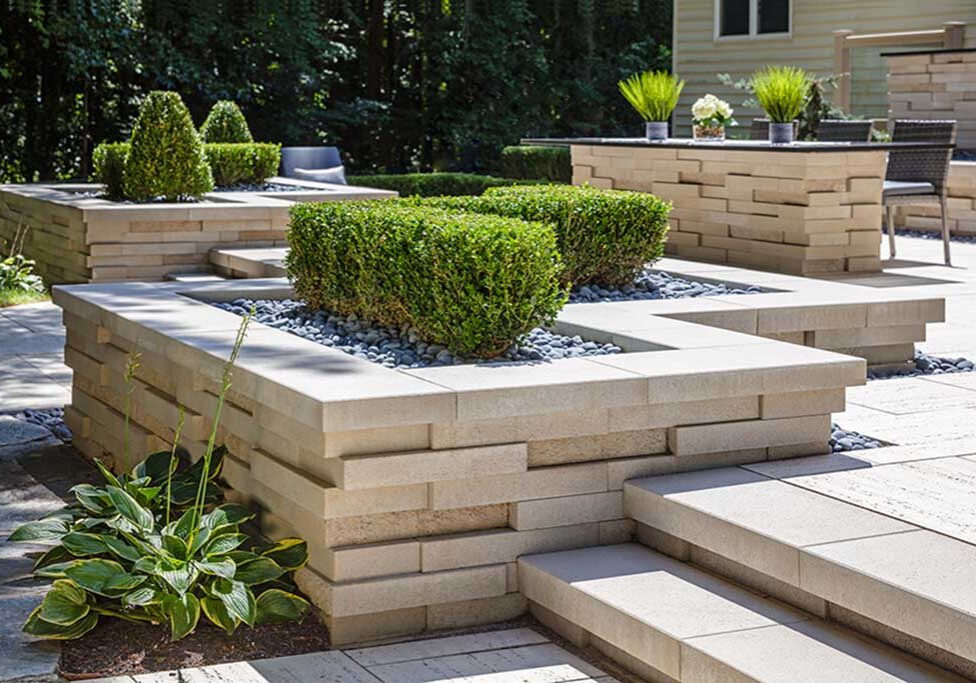
Segmental interlocking concrete blocks are the standard choice for most residential landscaping here, and they are designed to lock together without mortar. They handle the pressure clay soils generate on hilly terrain and stack into curves, corners, and terraces without custom cutting or professional masonry work.
Interlocking and Modular Blocks for DIY Projects
Interlocking blocks fit together by design, which makes them the practical choice for homeowners building their own garden walls. Modular systems accommodate gentle curves and follow the contours of a property, so the wall works with the grade instead of fighting it.
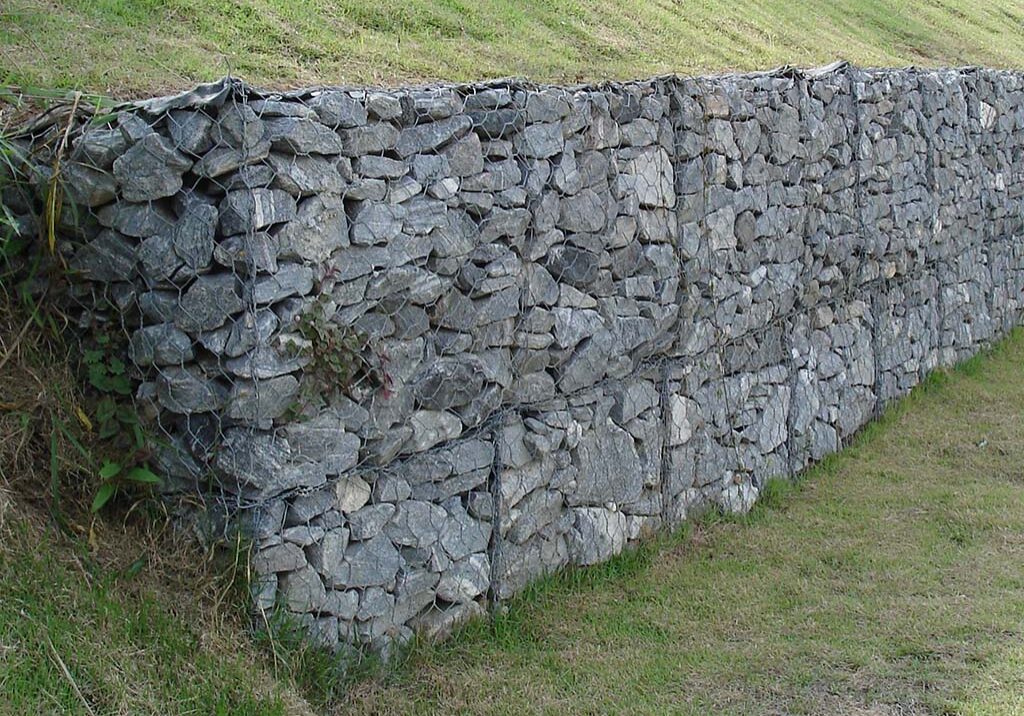
Hollow-Core Blocks for Heavy Drainage
Hollow-core blocks let water move through the wall structure rather than build up behind it, which suits sloped areas that see heavy winter rainfall. Filled with clean gravel, the cores become part of the drainage system instead of dead weight.
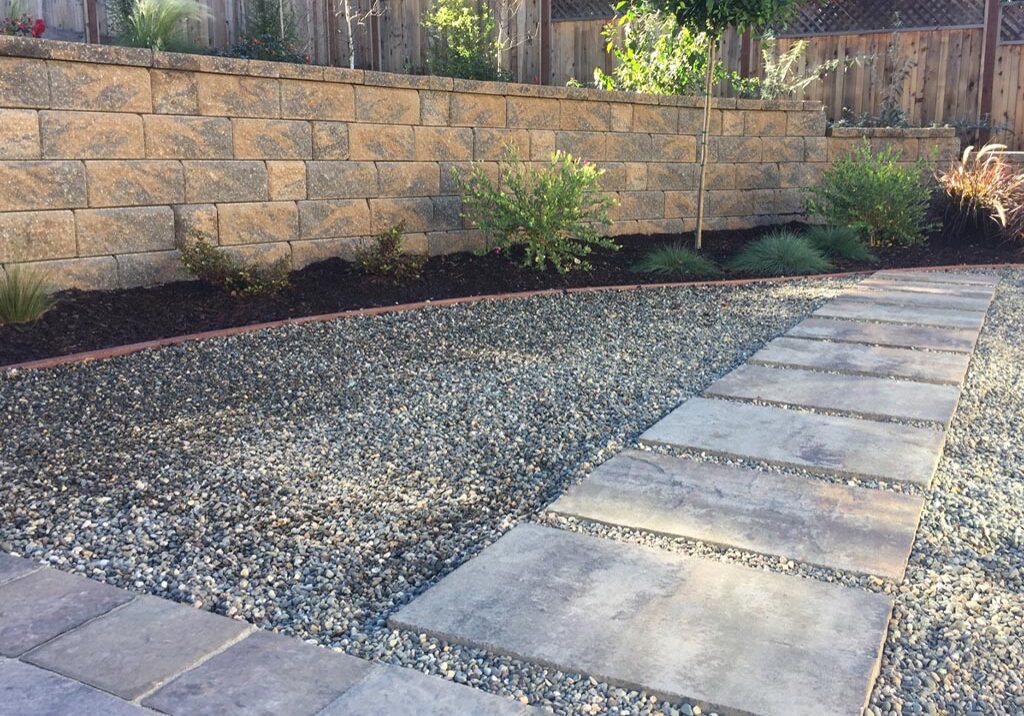
Engineered Blocks for Walls Over Four Feet
Walls over four feet typically require engineered blocks with geogrid reinforcement to withstand lateral soil pressure, and a permit is usually required at that height. We stock the heavier blocks and the geogrid, and we will tell you plainly when a wall needs engineering rather than a weekend project.
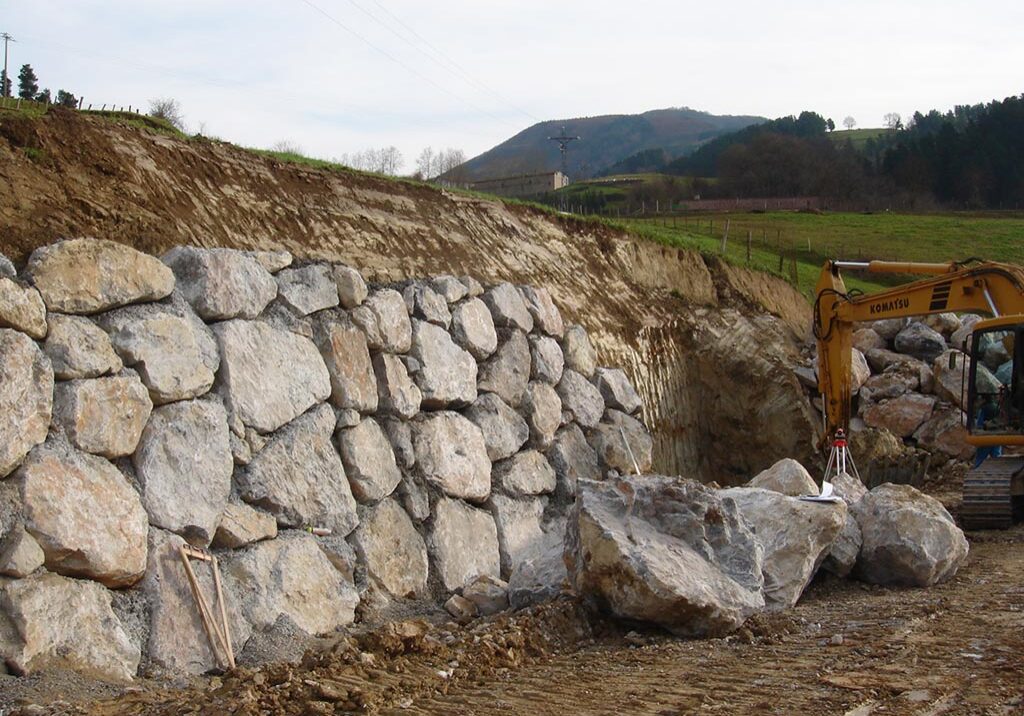
Natural Stone and Gabion Systems
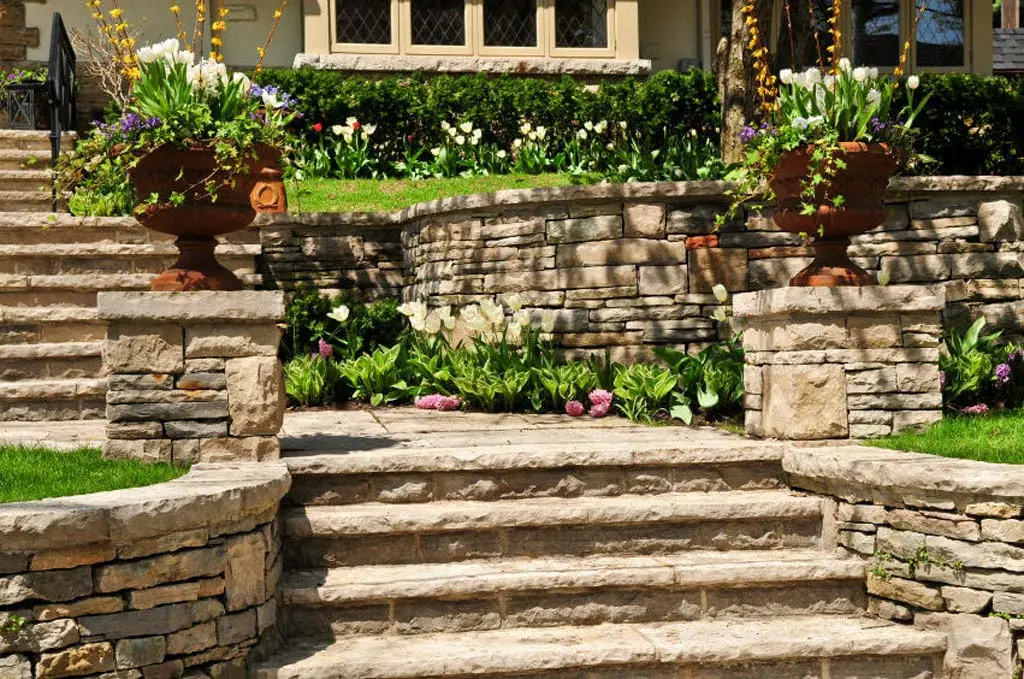
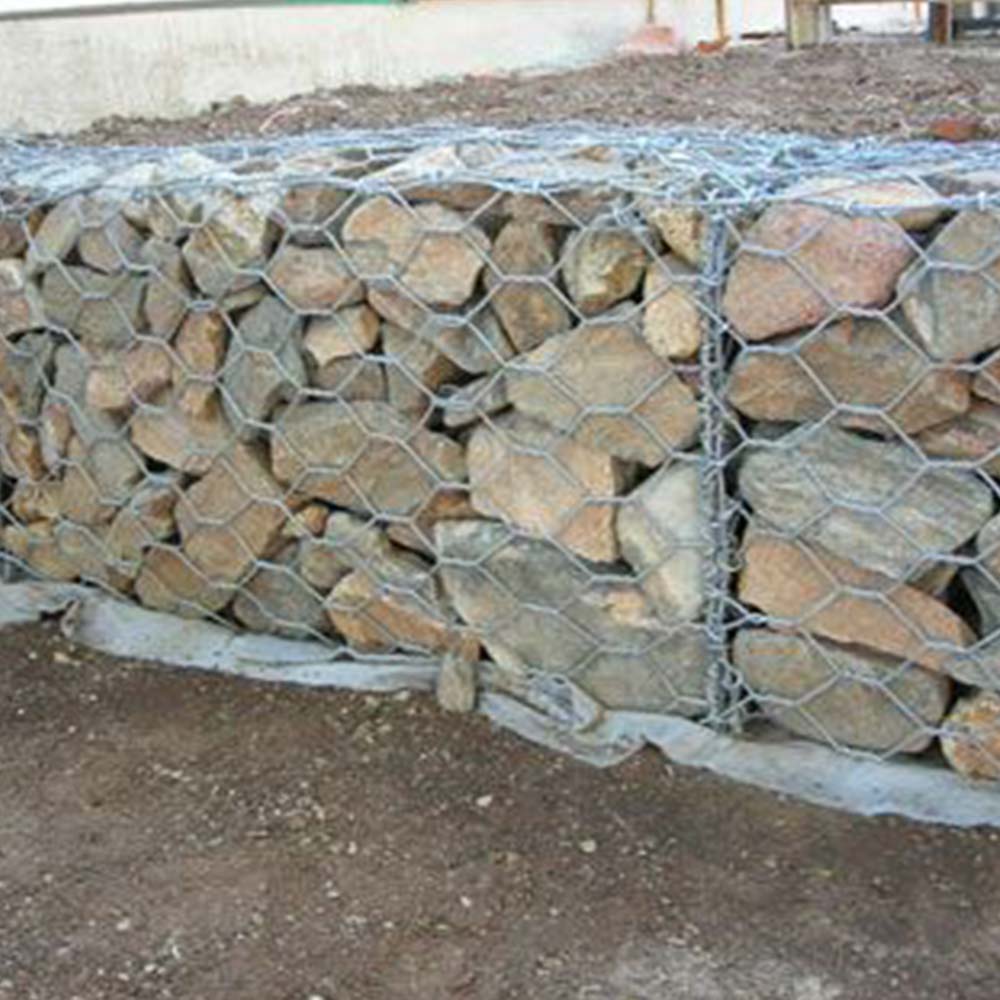
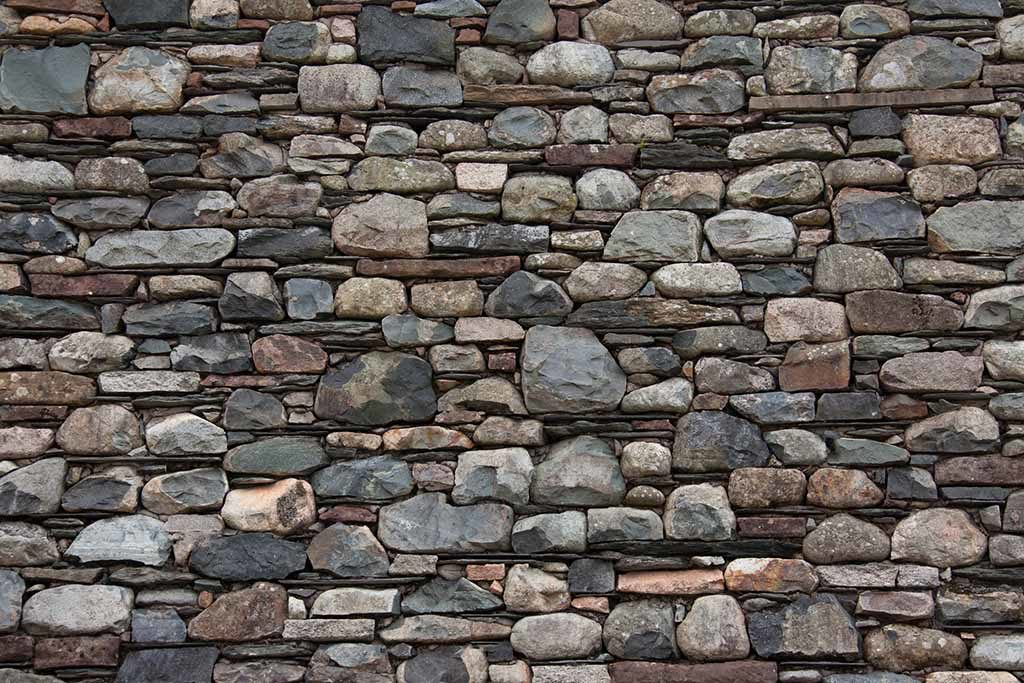
Natural stone gives a wall an organic appearance that no manufactured block can repeat, though it costs more to install. Gabion baskets, built from rock-filled cages, let water flow freely and suit creek-adjacent properties where drainage matters more than a finished face. Concrete and stone both resist rot, which timber does not in this climate.
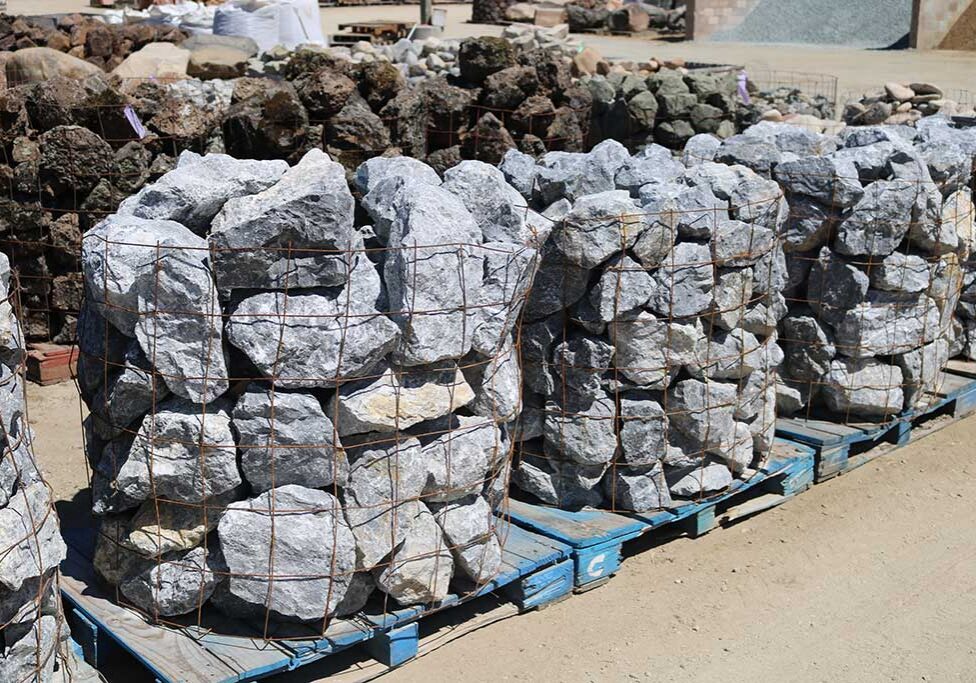
Caps, Base Rock, and Drainage Materials
Wall caps finish the structure and set with masonry adhesive that bonds permanently. We carry 3/4-inch crushed gravel for the compacted base and backfill, a perforated drain pipe for the footing, and the tools that go with them.
If We Do Not Have It, We Can Get It
We stock over 2,500 products, and the list keeps growing. When a project calls for a block, cap, or stone that nobody carries locally, we search our supplier databases for the unique, the hard-to-find, and the unusual, and bring it in. Show us the photo.
Wall Design Ideas for Your Outdoor Space
Match the structure to what the space actually needs to do.
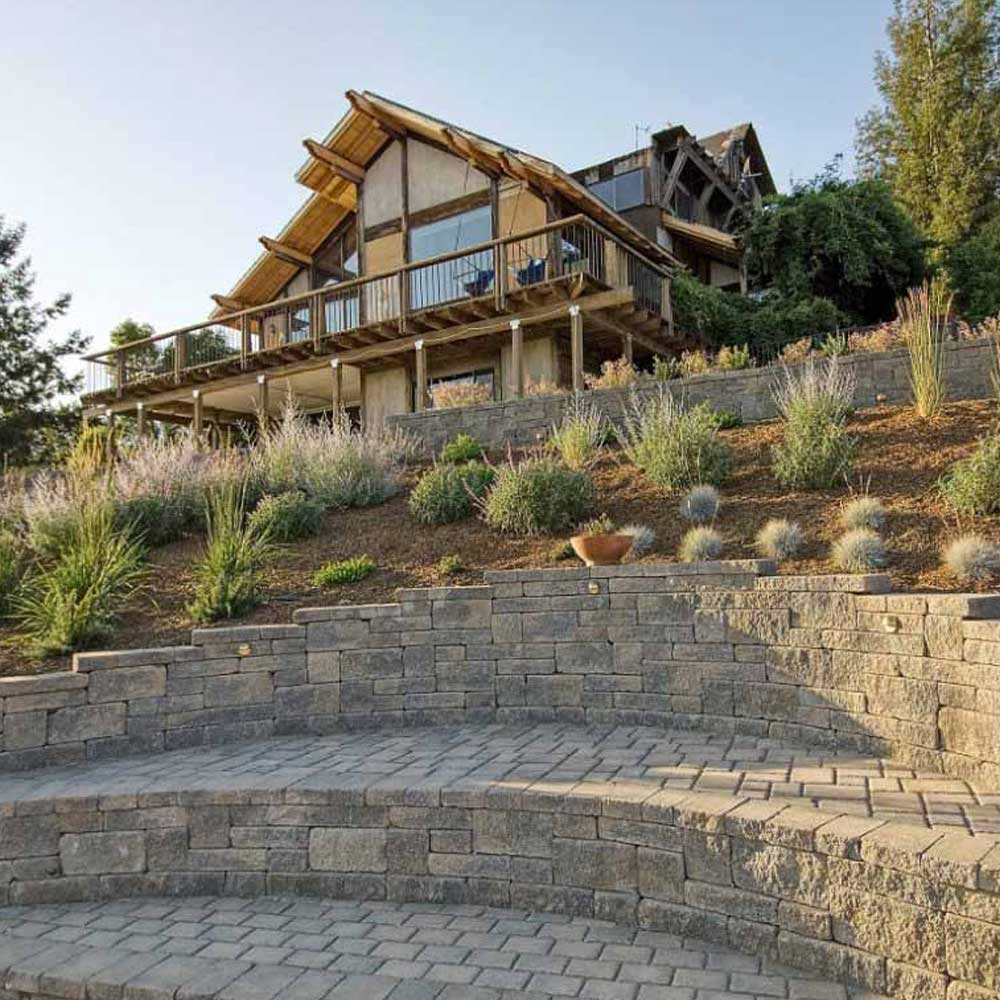
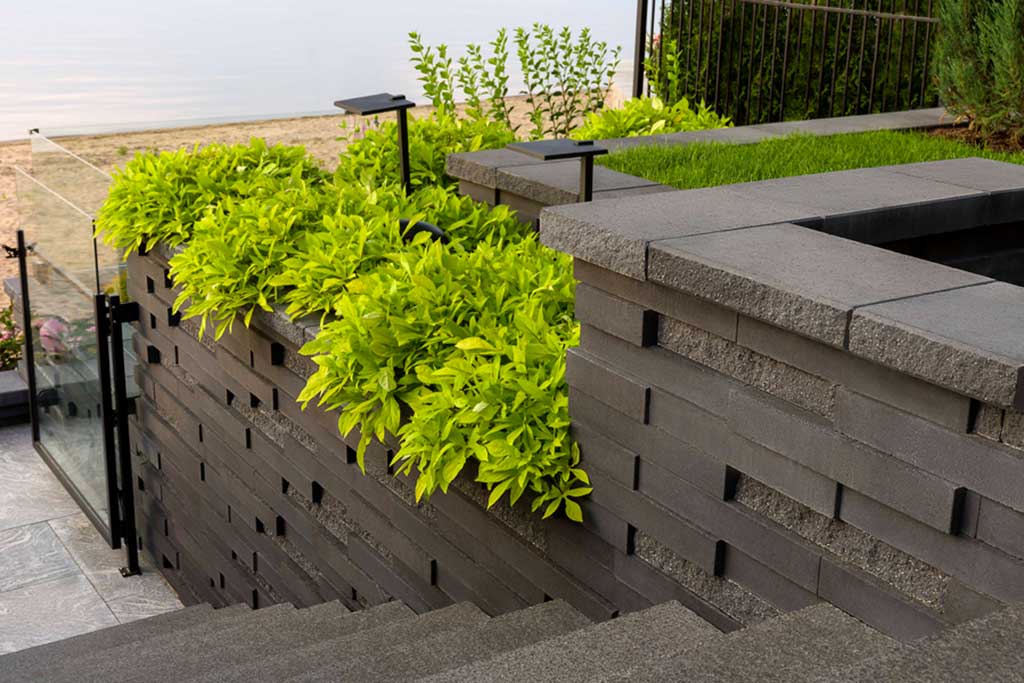
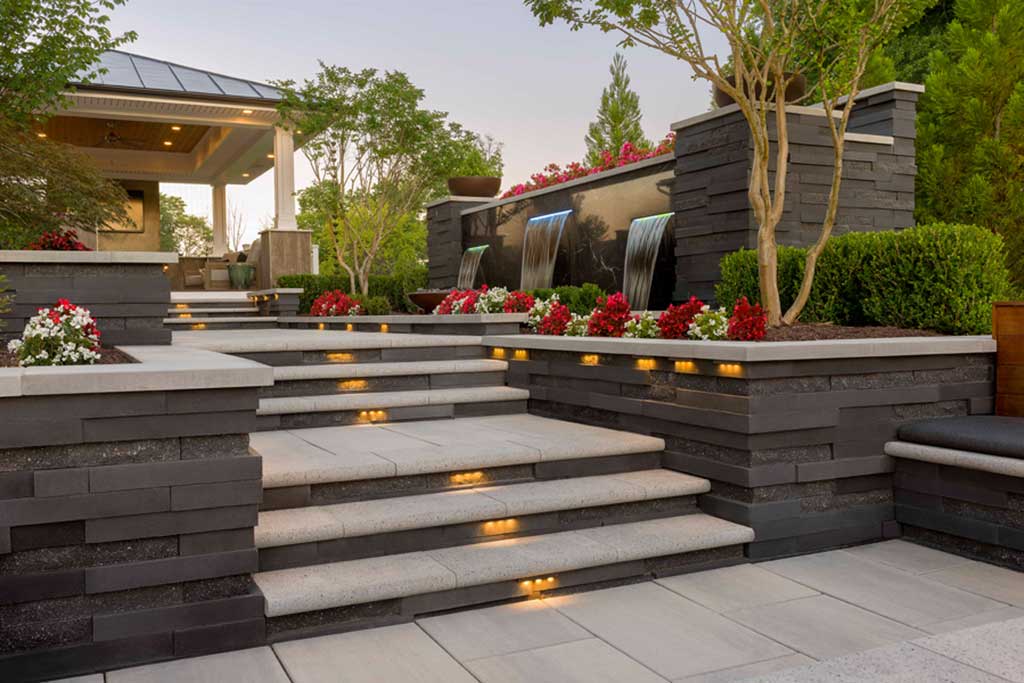
Terraced Gardens on Steep Yards — Stepping a slope into two or three shorter walls turns unusable grade into planting beds, and each wall stays under the height where engineering kicks in.
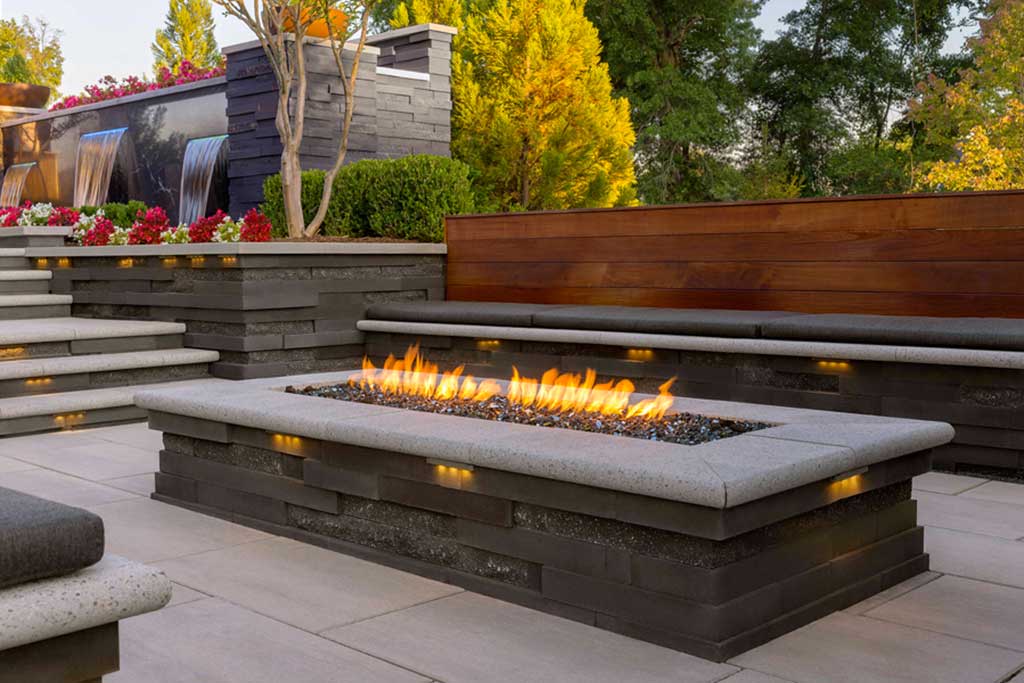
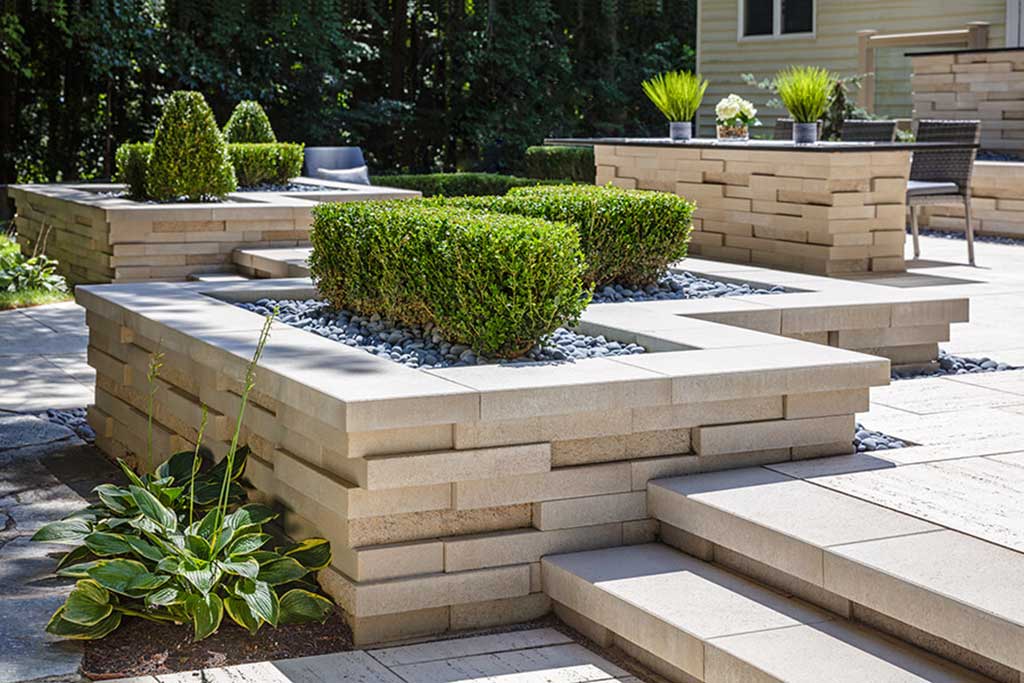
Seat Walls and Built-In Seating — A wall at 18 to 24 inches doubles as seating around a patio or fire feature, adding usable space without increasing the footprint.
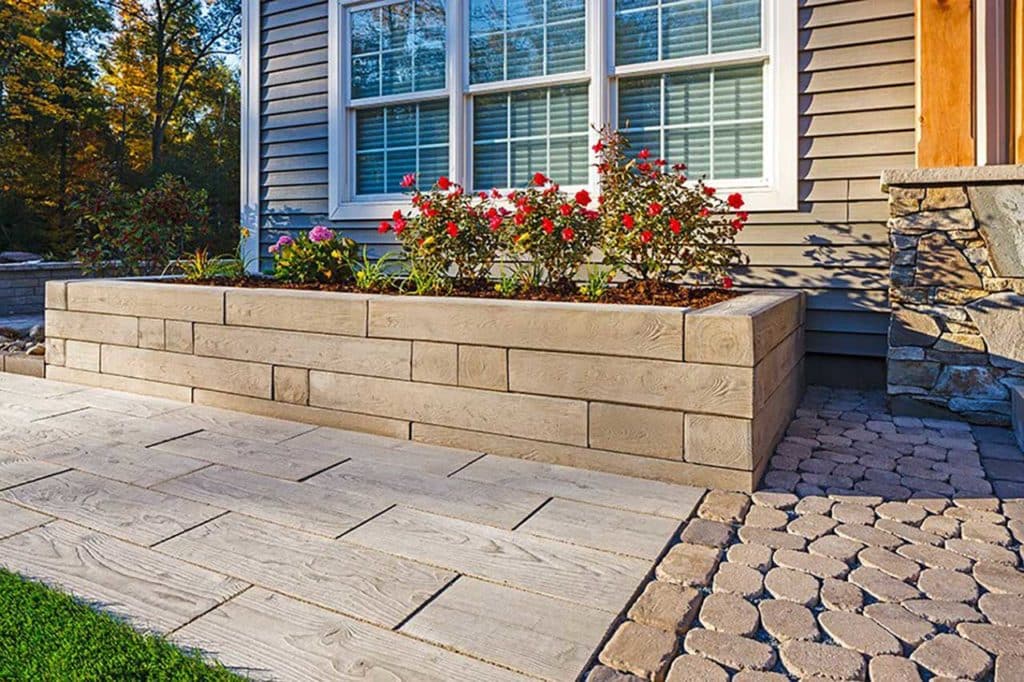
Garden Walls and Bed Edging — Low walls define a landscape, hold a raised bed, and add dimension and depth to a flat yard.
Structural Support on Slopes — Walls that hold back soil need drainage, a proper base, and blocks rated for the load. This is where block choice stops being about curb appeal.
Erosion Control — On sloped areas, a wall prevents soil washout during heavy winter rains and levels uneven ground into something you can use.
Bring the height, length, and slope of the area, and we will narrow the options before you start comparing prices.
Why Retaining Walls Fail and How Block Choice Decides It
Drainage failure causes most retaining wall collapses.
Hydrostatic Pressure
Water builds behind the wall and pushes with a force that the structure was never sized to withstand. Clay-heavy soils make it worse, exerting far higher pressure when saturated.
The Compacted Base
A base of 3/4-inch crushed gravel, compacted before the first course goes down, is what prevents settling. Settling starts underneath, where nobody is looking.
Backfill and Drain Pipe
Clean gravel backfill and a perforated drain pipe at the footing give water somewhere to go. Both cost a fraction of a rebuild.
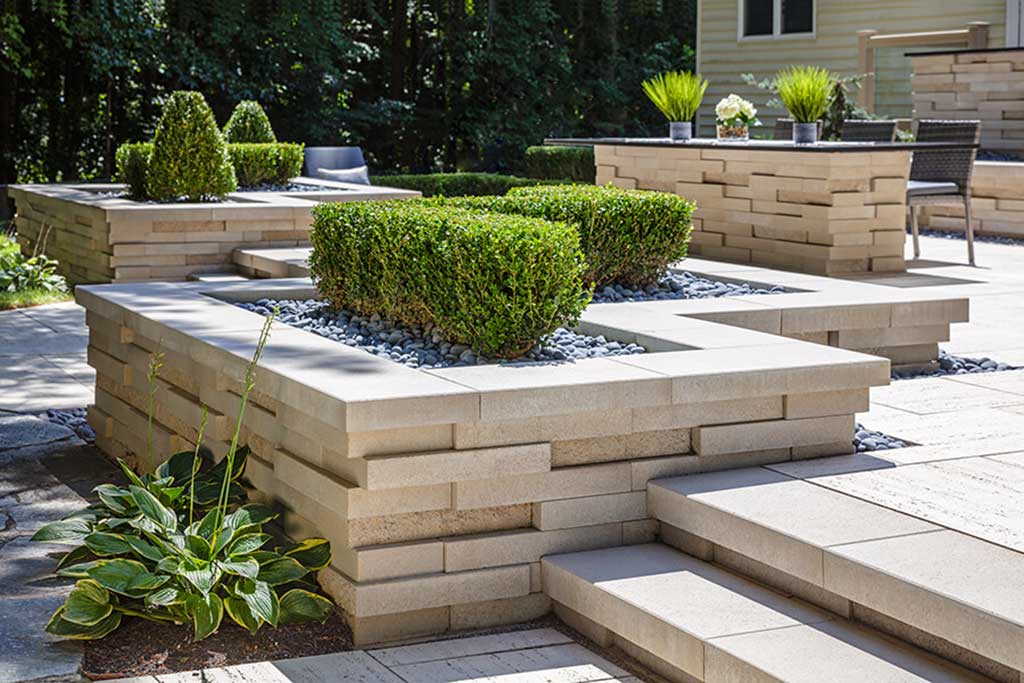
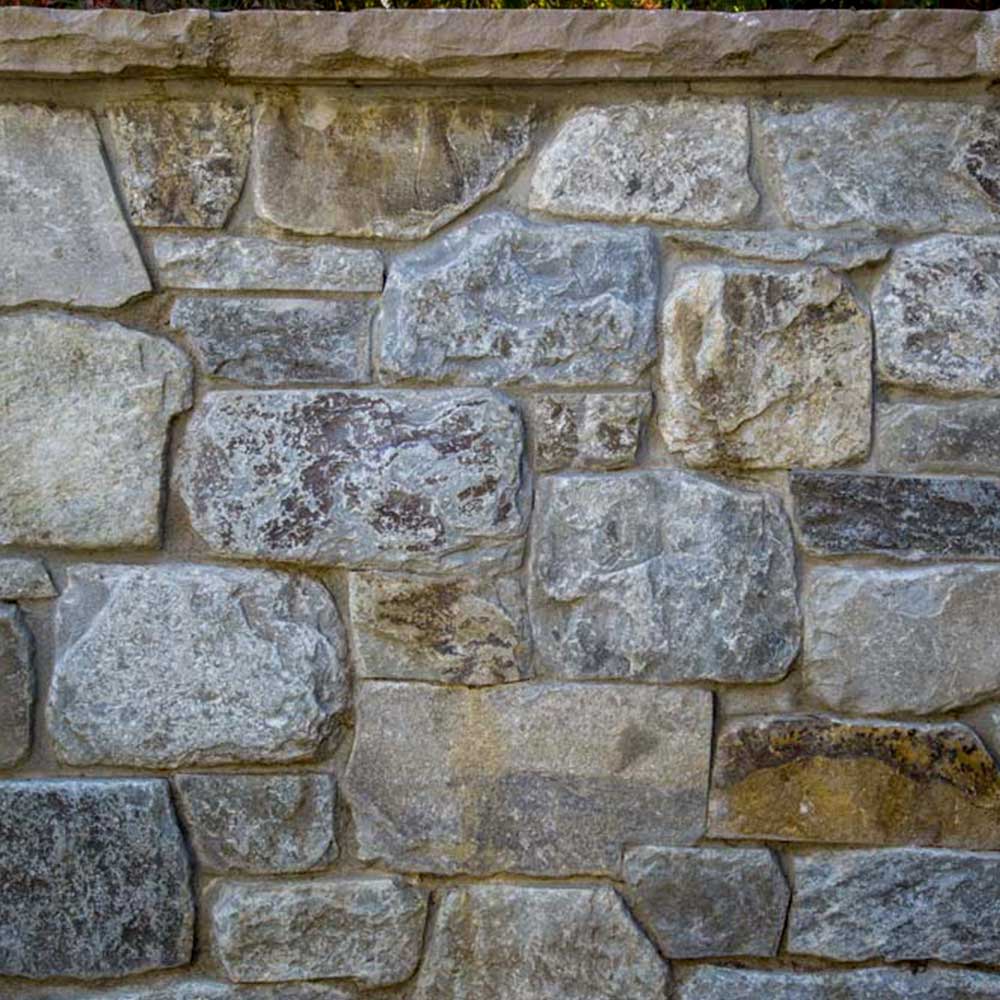
Retaining Wall Block Systems We Stock

Why Homeowners and Contractors Choose Central Home Supply
Over 20 Dry-Stack Wall Block Styles In Stock
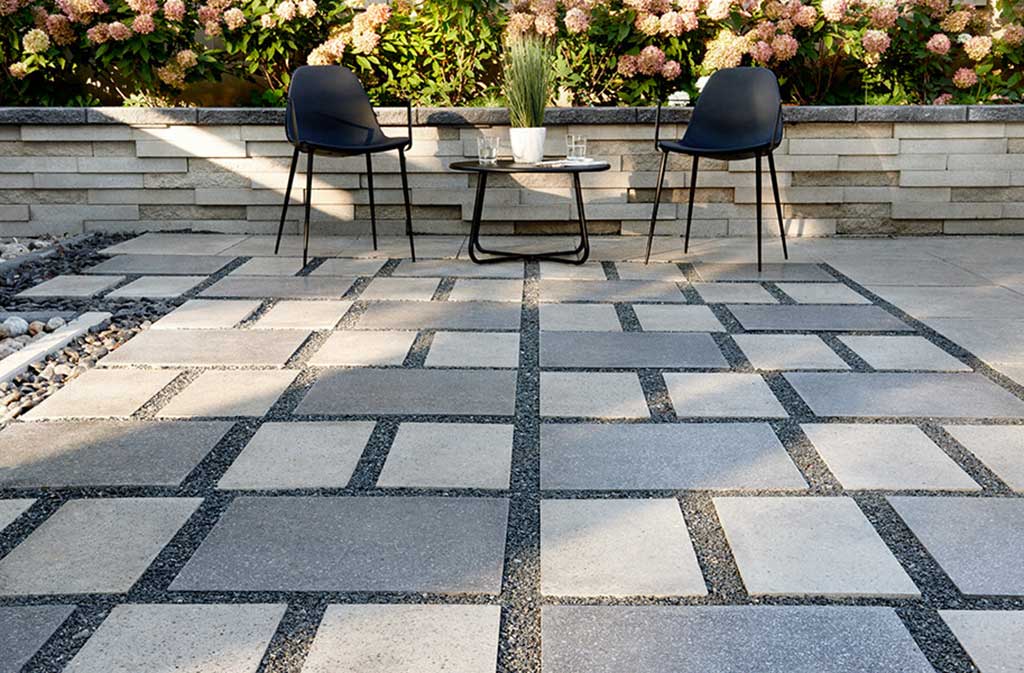
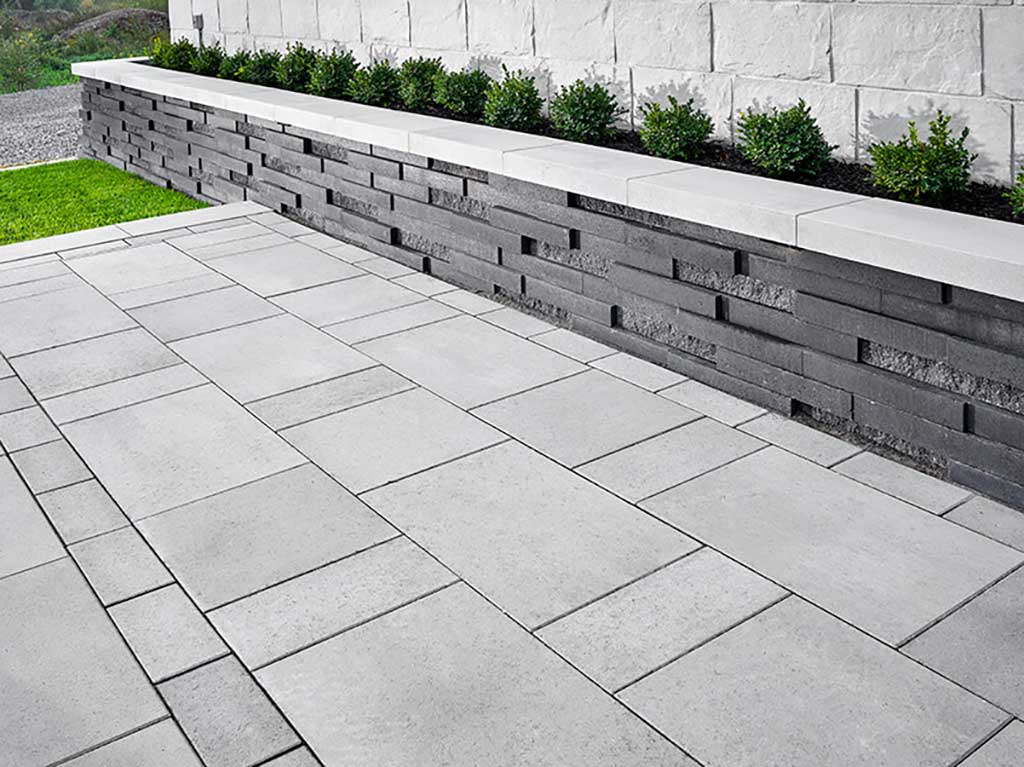
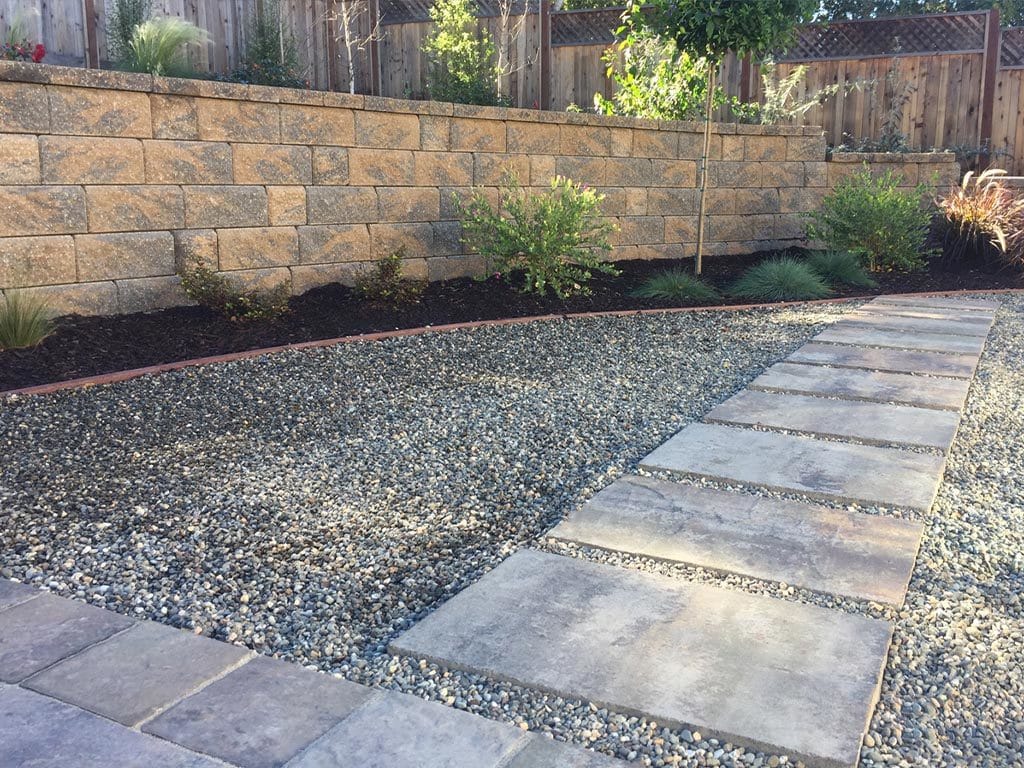
Shapes, colors, and textures across more than 20 systems, plus caps, gravel, drainage materials, and adhesive in the same yard. See them in daylight before you commit to a pallet. If we do not have it, we will source it.
Blocks Matched to Your Soil, Slope, and Wall Height
Clay-heavy ground needs a heavier block than a sandy lot, so we ask about height, grade, and drainage before you buy. We work out the block count and every supporting material from your measurements. Getting the spec right at the counter is cheaper than rebuilding a leaning wall.
Delivered Across Scotts Valley Terrain
Wall blocks are among the heaviest materials we move, and local slopes make delivery a planning problem. Tell us about access and where the pallets need to land, and our flatbeds, forklifts, and dump trucks will get them there.
How to Plan Your Retaining Wall Project, Step by Step
STEP 1
Measure and Assess
Bring the height, length, and slope of the area, plus a photo, to 180 El Pueblo Road. Wall height drives nearly every other decision, including whether you need a permit.
STEP 2
Choose Your Block and Confirm Quantities
We walk you through block types, shapes, and colors against your budget and your soil, calculate every material the wall needs, and tell you what is in stock now versus what needs ordering. Take a sample home before anything is ordered.
STEP 3
Pick Up or Schedule Delivery
Load out at the yard, or book delivery with the pallets staged where you actually need them. Tell us about access and slope so the schedule holds.
STEP 4
Get a Contractor Referral
Building it yourself, or need someone? We point you toward licensed local contractors who work with these systems regularly, and we stay available for additional blocks as the project moves forward.



What Our Customers Say
Trusted and Certified

Retaining Wall Blocks: Common Questions
Our Latest Blog
Why Your Patio Needs the Right Bedding Sand
How Many Bricks for a Square Feet of Paving? Homeowners Essential Guide